Kickin-in with our first week in year 13, we began our 2nd unit of AS Media Studies and received a new aim: do a music video - however, lip sync.
In order to absorb some knowledge from music videos, we covered some lessons in order to learn more about music videos and its styles and from these lessons we were able to achieve a clear understanding and brief idea of how to make and 'sell' a music video to the audience, as well as how to identify the generic conventions of specific genres and styles of music, and finally last but not least, the gratification of the video for both - audience and the artist.
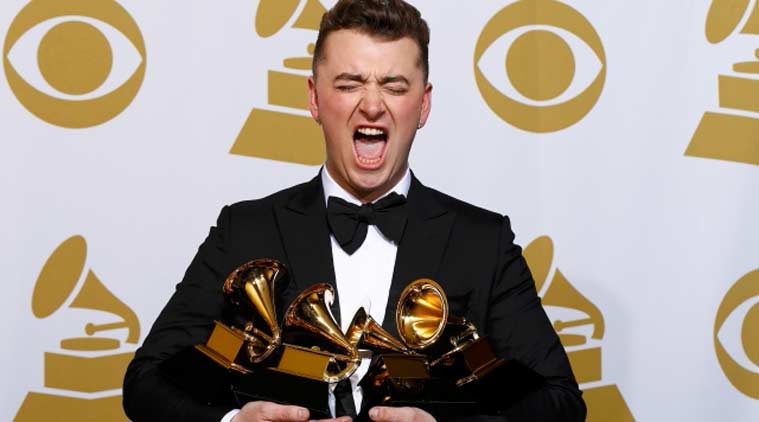
Sam Smith
We also learnt about "Representation theories" within artists! - this is simply focusing mostly on how an artist is represented - including genders (either negative or positive); also, how these representation theories apply to music nowadays and how artists are changed and how they are represented (as each artist sings and 'embodies' different types of music - therefore, their representation should also engage).
Last but not least - Generic theories within music videos... such as - genre, sub-genre, hybrid, as well as how these generic theories link and connect to each one of them, and what impact and effect or even entertain it could cause on the artist's audience/fans/admirers.
Genre, Sub Genre and Hybrid Genre - these are the 3 main genre types within music; but what do they mean? Genre - An 'easy-to-spot' music category, such as: Hip Hop, Rap, Pop, Country, etc. Sub-genre:A 'mixture'/ subdivision of music genre, such as: Electro Punk, Pop punk, etc. Hybrid Genre: A major combination of genres that could possibly make up another type of genre, such as: Eminem ft. Rihanna - friends with a monster (rap and pop), Pitbull ft. Ke$ha - Timber (country and electronic). As a brief summary: The "Genre Theory" is all about different types of music which makes them unique - repetition and difference. In this specific context - "Genre Theory" refers to the type or kind of the music video we are watching; as for each genre has its own set of characteristics which makes them unique and each artists is known for the genre, in order to be recognised and appreciated by the audience/fans/ admirers and may also create a sense of pleasure within, for example: emotional attachment. Emotional attachment could be emphasised once an artists chooses to play around with their genre and music video and creates a sense of nostalgia/sadness and maybe empathy; for example, in the music video "Stay" by Rihanna, when she's crying in the bath tub, it creates a sense of empathy between her and her audience/fans. POP
Pop is also another genre that has key conventions which are repeated throughout the music industry. For example, most of the songs are upbeat and about relationships and love, you mostly hear word choice of lyrics such as 'Baby' 'Love'. This is due to mostly convey the relationship life to identify with other people and fans. While in the music POP industry it is often upbeat there is also a lot of hyperactive dancing or women showing a lot of skin
There are many ways in which artists are represented, or even other characters which are picked to be the main focus within a music video.
The representation of a character within a music video is very important, because the audience, as well as the media are defenitely going to comment in every single 'pick up' detail possible.
representation: positive or negative? maybe negotiable?
There are many styles and conventions within videoclips, which make them so unique and so interesting to be played and replayed so many times.
However, being interesting and unique could come from many points of view - could be the music that's awesome, the artist's behaviour, the way the camera moves, etc.
Within a music video, there are many "things" such as styles and conventions, which makes the video so popular; these are:
Types of music videos:
Narrative Music Video:
This is a type of music video, which tells a story. Additionally, this is a really good technique, in order to link, attract and engage more audience from different ages, to different cultures, to different lifestyles, etc.
I personally think that, when a music video tells a story, also with the music - it lets the audience see the artist's expressions and emotions.
For example, the clip I've attached here - Beyonce - Pretty Hurts mainly attracts young female whom dream of becoming a model. However, Beyonce on the other hand, is transmitting the message that, becoming and being a model "perfect" may have its risks and consequences, such as not being "happy with yourself".
Moreover, whereas for the artist, it can become a benefit because fans and viewers might wait for the next clip, to receive another message. On the other hand, narrative can be used to "conquer" people's feelings and emotions. For example, Eminem has released a music video with footage of his own daughters Hailie Mathers and Alaina Mathers. Additionally, throughout the videoclip, the audience is able to see how Eminem has always been there for his daughters and how caring he was towards Hailie, especially.
Moreover, the song is a message to his daughters, also mentioning their mother - not in a rude way. This can engage audience, such as fathers and daughters as they can relate to the situation (especially fathers who have raised up their daughters, alone.). Also, the fact that the song is such a caring message towards his daughters and the footage is also linked to it, shows Eminem's softest side, which is pretty "cute", as men are seen in a stereotypical serious and "strong" way.
Performance Music Video:
Performances are very common to be recorded for the music's videoclip.
This is because, performances are quiet enthusiastic and live and that's exactly what mainly attracts the audience - especially young adults, which are the majority whom listen to most artist that choose this type of music video.
Examples of artists who chose this type of videoclips are Jay-Z, Adele, Beyonce, Nicki Minaj, 30 Seconds to Mars, etc.
Additionally, using performance within their music videos, attracts even more audience to buy tickets for future concerts, because all these music videos being recorded via a performance shows the excitement and the high energy in the crowd.
Camera Shots:
Many music videos ought to include long shots, as well as medium shots and especially close ups; the explanation for such thing is basic - it's simply to create a certain sympathy and emphasis on the artist, emotions and location.
Additionally, when close-ups are used within a music video helps the audience to engange with the artist and be able to receive the emotions and messages being sent. Moreover, close-ups are also famous for its powerful force of hypnotize the audience to focus on the lyrics - this is mainly because, when there's a close-up on the artist's face, the audience tends to read their lips and go along with the lyrics; with this, they receive the message being sent accross the music. For example, on the clip on the right hand side, Selena Gomez - The heart wants what it wants, there's plenty of close-ups in Selena's face, showing her facial expressions and tears, which immediately gives out the message the lyrics are quite sad. Also, tears in a video clip could also be truthful, which could possibly show a story behind the cameras - "Selena's love life". Lastly, by the close ups and sad facial expressions being exposed in this video clip, I am able to recognise that the aim target audience for this music video is mainly broken heart young adults, who are probably trying to "run away" from a relationship, but " the heart wants what it wants".